The Militarized Elections of Mexico

bayareaintifada's avatarbayareaintifada

Ph: @ProyectoePuente

From la izquierda diario
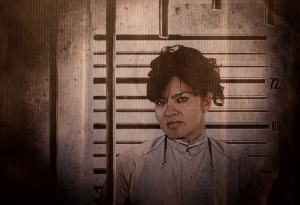
Thousands of teachers from the National Teachers Coordinator (CNTE), along with students, social organizations, the parents of the 43, local farmers, and popular sectors have been organizing a great mobilization for the past few days in order to boycott and stop the elections. Up until Friday, Lorenzo Cordova, the president of the National Electoral Institute (INE), was announcing his guarantee that the elections were going to take place throughout the whole state of Oaxaca.

The actions taken by section 22, section 18, and 7 of the State Coordinator of Education Workers in Guerrero (CETEG) alongside popular sectors to boycott the elections demonstrates the profound hatred and out right questioning of this “democracy” and their militarized elections.

After 72 hours the following has taken place: In Veracruz students and activists houses were raided by paramilitary and “thugs” heavily armed, resulting in a number of injuries…

View original post 505 more words

Posted in Uncategorized | Leave a comment

Full Dillon Taylor Bodyçam Video Shows Police Will Kill Anyone, and Courts Protect Them

Posted in Uncategorized | Leave a comment

México: Nestora Salgado, en situación desesperada

U.S. Citizen and Mexican Indigenous Leader wrongly imprisoned in Mexico.

Red Latina sin fronteras's avatarRed Latina sin fronteras

________nestora-salgadoArturo Sánchez Jiménez
La Jornada
16 de mayo de 2015
 
José Luis Ávila no cree que su esposa, Nestora Salgado, “aguante mucho” la situación que está viviendo en la cárcel. A la salud precaria de la coordinadora de la Policía Comunitaria de Olinalá, su marido considera que “hay que sumarle los dos años que lleva mal alimentada en el penal” y la falta de atención médica especializada que requiere.

Ávila participó ayer, vía telefónica, en una conferencia de prensa celebrada en la ciudad de México. Expresó que tras 10 días en huelga de hambre, dos años de encarcelamiento en un penal federal y los nulos avances que hay en el proceso judicial que se le sigue a su esposa, ella y su familia están “en una situación desesperante. No creemos que nos aguante mucho”, sostuvo.

Hasta las últimas consecuencias

Agradeció a quienes han manifestado su apoyo a Nestora Salgado…

View original post 303 more words

Posted in Uncategorized | Leave a comment

Activists Were Invited Briefly Inside of the Mexican Consulate

This gallery contains 7 photos.

More Galleries | Leave a comment

White Mob Viciously Attacks, Nearly Kills Black Siblings and the Media Is Silent

bayareaintifada's avatarbayareaintifada

Screen Shot 2015-06-04 at 12.45.53 AM Photo from Kristina Fox

Racism & the Media: White Mob Viciously Attacks, Nearly Kills Black Siblings and the Media Is Silent

From Bay Area Intifada

Written by Jabar

A plea for support by way of a Facebook post started making its rounds early Wednesday morning. Kristina Fox of Chicago posted a horrifying account with graphic photographs of a vicious beating that nearly killed her and her brother Marcus Fox. The following is the full post from Kristina Fox:

From Kristina Fox:

“On the morning of Saturday, May 30, 2015, my little brother, Marcus Fox, my daughter’s father, Darrius Walton, and myself were sitting in [Chicago/Canaryville’s] Taylor Lauridsen Park conversing with 3 Caucasian people we had just met (Courtney, Kevin, and Jodie). Everyone was having a nice time. Approximately 7-9 more Caucasian people arrived in the park.

My little brother being the social butterfly he is introduced himself and began…

View original post 1,014 more words

Posted in Uncategorized | Leave a comment

Unity Against Police Brutality by Unity Against Police Brutality – GoFundMe

http://www.gofundme.com/vb5dxj5d
“The Button Project designs, assembles and delivers National Unity Against Police Brutality buttons and provides them totally free of charge to families who have lost a loved one to police violence.”

“We make no judgements about the victims in each case, we make the buttons for the families in an effort to show support for them and to include them with other families under one “umbrella”.

“To date we have made over 15,000 buttons for over 100 families in 14 states. Except in unusual cases the families participate in the design of the buttons; they choose the photo to be displayed and the name style they prefer.”

“It is our policy that buttons cannot be purchased and should not be sold out of respect for the images represented and we ask that they not be used in branding or promoting any other agenda.”

“We accept donations to cover the cost of printing, button parts and shipping and all monies donated will be used only for those expenses.”

Posted in Uncategorized | Leave a comment

More than 350 People Killed by US Police in the past 5 Months | News | teleSUR English

http://www.telesurtv.net/english/news/More-than-350-People-Killed-by-US-Police-in-the-past-5-Months-20150531-0001.html
“Almost all of the policemen that have opened fire on unarmed civilians have been cleared of charges. Police in the United States have killed 385 people over the past five months, according to a report published Saturday by the Washington Post. The report was based on police records, news reports, internet sources and the paper’s own original reporting. Most of victims – 80 percent – were carrying weapons or objects considered a lethal hazard, however this did not necessarily translate into the victims posing a real threat to the lives of police officers. “The average number of police victims stood at 2.6 per day” For example, police shot an elderly man after his son asked them to make sure he was okay. The man, 77-year old Mr. Douglas Harris, answered the door whilst holding a gun, which triggered two deadly shots fired by the police. Furthermore, nearly a quarter of those killed were identified by police or family members as mentally ill, and about half of the shootings happened whilst attending domestic disturbances or complex social situations (eg.: a homeless person behaving erratically or a son threatening to commit suicide)..”

Posted in Uncategorized | Leave a comment

Keywords in Black Protest: A(n Anti-)Vocabulary

http://www.truth-out.org/opinion/item/31051-keywords-in-black-protest-a-n-anti-vocabulary

“Riot: We say “rebellion”; they say “riot.” We say “uprising”; they say, yet again, “riot.” The narrative power of this difference is steeped in historical precedent. A wave of uprisings in the 1960s that erupted in response to Jim Crow segregation, expanding war and Black assassination are logged in historical memory and scholarship as riots; the 1992 Los Angeles rebellion is more than 20 years old now, but the language of “riot” remains indelibly attached to that event and location, encouraging even the most attentive of us to sometimes slip. This is evidence of the media monopoly on language, but also a reflection of a deep desire and need to construct and enforce a common sense that defines publicly defiant Black collectives as criminal.

The long history of assault to Black assemblage dates back centuries and includes South Carolina’s 1740 Negro Act, which was a response to the Stono Rebellion and made it “illegal for slaves to move abroad, assemble in groups, raise food, earn money, and learn to read English. Owners are permitted to kill rebellious slaves if necessary.”

Black assembly is here punishable by death, a consequence not far from the thoughts of contemporary Black activists. Since the turn of the 20th century, “rebellion” has been disarticulated from popular discussion of Black dissent, undoubtedly in part due to its pairing with the institution of slavery – an institution from which this country still labors to maintain distance. The structure that produced this inhuman condition is, however, not past/passed; as Saidiya Hartman has theorized, the “afterlife of slavery” against which we now rebel includes “skewed life chances, limited access to health and education, premature death, incarceration, and impoverishment.” These are the conditions to which protestors in Baltimore, Ferguson, Milwaukee, Atlanta, Los Angele, and numerous other cities are responding.

These historical scenes are related – one an extension of the other – and our vocabulary should reflect this relation, must reflect this relation. The juridico-structural turn to riot post-Emancipation has entrapped Black dissent inside of state and federal punishment taxonomies, such that a riot conviction in Baltimore now carries a possible life sentence. Adjusting this language not only adjusts the terms of the debate, but also the terms one serves.

Gang: Since the late 20th century, the term “gang” has come to connote a manufactured fear of rogue Black collectives representative of all that is wrong with the United States of America. Born from a treacherous coalition of public policy and visual media propaganda, the current invocation of gang is a loaded slur weighted by the erasure of lived experience. The invocation of “gang” is easily found in the archives of gentrification policies that have become all too prevalent in cities across the country. For example, the Gang Enhancement Law in California, which defines a gang as “three or more persons,” has been used to sweep city streets from East Palo Alto to Downtown Los Angeles in preparation for the glorious coming of a technocrat managerial class and designer lofts.

Buttressed by an ever-inhabitable need to reinforce the racial villain, the popular imagination of gangs has been informed by a litany of asinine television programming and more decrepit renderings via online platforms. The ease with which gangs are equated with the US military, police, or corporate executives elides the much more insidious impact of gang terminology and rhetoric, which is an erasure of Black communal organizing in the face of racial terror. So-called gang members are living in conditions that were wiped clean via removal of social infrastructure (i.e. the elimination of the Comprehensive Employment and Training Act in the 1980s), the targets of the largest dispossession of wealth during the subprime crises of 2008 and the residents of communities that endured the evisceration of health care from the mid 1990s through the current time period. Yet, we’ve developed and implemented coded language that places the burden of poverty back onto the very population who were forced into destitute conditions. The reality of the situation is much more complex than that popularly rendered.

Though many argue that gangs embody an evil to be stamped out, the reality of the situation is that despite multiple forms of state violence enacted against Black communities, Black people organized themselves through a profound sense of love and community. Such an act in the face of extreme hate was then met with even more disdain that was reinforced with the overuse of the racially charged moniker of “gang.” Such organizing strategies are embedded within a politics of resistance and renewal that consistently make radical demands upon the state.

As Joao Costa Vargas beautifully described, the 1992 truce in Los Angeles was about much more than violence; there also was a written manifesto presented to the civic leaders with a list of demands in the wake of the ’92 Rebellion. Such simple characterizations (i.e. the labeling of gangs) of highly complex organizations are dismissive of the truths that reveal the wretched conditions of police violence, housing discrimination and elimination of basic forms of health care that Black people have been forced to endure as well as the brilliance of Black organizing that has developed in its wake.

“Words have power, but we have the power to define and (re)imagine how to deploy words that will ensure the transition to a radically democratic society. This struggle requires vigilance on every level. Our narratives and practices of protest and justice will always be multiplicitous – as they should be – but the construction and adoption of a common tongue allows for alternative communication strategies and new agency over the ways our histories, presents and futures are told and experienced.”

Posted in Uncategorized | Leave a comment

Report: Black Women in San Francisco Are Nearly Half of City’s Female Arrests | News | BET

http://www.bet.com/news/national/2015/05/28/report-black-women-in-san-francisco-are-50-percent-of-arrests.html?cid=facebook

Posted in Uncategorized | Leave a comment

Hiring More Cops of Color Won’t End Police Violence Against Black Civilians | Colorlines

But having even the most diverse workforce won’t remove the need to do two critical things – address the prevalence of hidden, unconscious bias against black people and examine the racial impact of all of a department’s policies and practices, regardless of who is carrying out them out.

The actual implementation of police procedures is an arena ripe for these unconscious biases to emerge with terrible consequences. That phenomenon is called implicit bias, and it exists in all of us. I’ve observed a wrong use of implicit bias out in the world – often people think it means that we all have biases against each other, and these biases are evenly distributed. But they are not. We all do have biases, about ourselves and others, but those in this society overwhelmingly favor white folk. In one study, researchers used video to measure shooting responses [PDF]. Officers were told to shoot the armed man, whose image was sometimes black and sometimes white. Participants fired faster at armed targets if they were black, and more quickly decided not to shoot unarmed targets if they were white. White and black officers had similar responses, so there wasn’t much difference in decision making based on the identity of the cop. From recruitment to hiring to training, solutions to implicit bias are emerging all the time, and they need to be in every police chief’s toolkit.

Those solutions go far beyond recruiting and hiring people. They include modes of community policing, determining probable cause for a stop, and supervision of officers. Rather than focusing all the attention on diversifying forces, we should be asking police departments to examine all their work for its racial impact. Colorlines’ publisher, Race Forward, has a racial equity impact assessment that provides a helpful framework, and dozens of cities are looking at the Governing for Racial Equity network as a potential support for change. http://www.colorlines.com/articles/hiring-more-cops-color-wont-end-police-violence-against-black-civilians

Posted in Uncategorized | Leave a comment