END State Sanctioned Sexual Assault, Rape Culture and Law Enforcement Impunity

by Cathy Mendonça                                                                                                              (member of UAPT and survivor of police sexual assault.)

The San Diego police department’s scandal involving officers accused of preying on women who they came in contact with while in uniform and on duty.

Anthony Arevalos

Anthony Arevalos

First, former officer Anthony Arevalos is serving an eight year sentence for molesting female drivers during traffic stops in the Gaslamp quarter from 2009 to 2011. As a result, Chief William Lansdowne implemented changes within the department to help uncover the potential for other rogue officers to go unnoticed.
christopher-hays

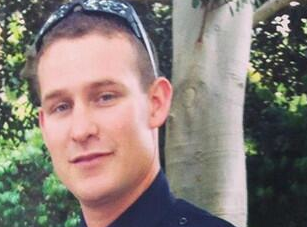
Christopher Hays

Then, on Feb. 9, Officer Christopher Hays was booked on criminal charges in connection with inappropriate pat downs that prosecutors allege were done for his sexual gratification.

In the process of the Hays investigation, another unidentified officer was accused of exposing himself and inappropriately touching a female in custody.

The department launched a new policy requiring TWO officers to accompany females in custody.

The timeline of events are as follows:

Oct. 30, 2013: Woman identified as “Jane Doe 1” was frisked by Officer Hays. She is later named in a criminal complaint alleging false imprisonment and sexual battery.

Nov. 10, 2013: Hays allegedly committed sexual battery in an incident involving a woman identified as “Jane Doe 2”, according to a criminal complaint filed against Hays on February 18.

Dec. 23, 2013: Hays is accused of sexual battery involving a woman identified as Jane Doe 3 according to a criminal complaint filed following his arrest.

Dec. 24, 2013: A fourth incident allegedly occurred this time involving false imprisonment of a woman identified as Jane Doe 4, prosecutors allege.

December 2013: After a woman contacted SDPD complaining about Hays’ behavior during a “pat down,” an internal affairs investigation was launched.

January 2014: Case was handed over to the San Diego District Attorney’s Office for investigation.

Feb. 6: Chief Lansdowne confirms an officer is under investigation for sexual misconduct involving four women.

Feb. 7: Attorney Dan Gilleon claims a fifth woman has come forward with allegations that are more severe than what the victims before her may have alleged. His client claims she was coerced into giving Hays oral sex in exchange for her freedom in October 2012. She claims she contacted SDPD but did not receive a call back.

Feb 9: Officer Hays was booked into San Diego County Jail on charges of false imprisonment and sexual battery.

Feb. 9: Chief Lansdowne confirms five alleged victims had contacted the police to accuse Hays of improper pat downs and the sixth woman had gone to Gilleon.

Feb. 14: Attorney Brian Watkins said he represents a seventh alleged victim who claims Hays touched her breasts, “caressed her crotch, caressed her buttocks and then grabbed her wrist and put her hand on his crotch” during a pat down in

October 2013. His client did not report the incident to police.

Feb. 18: District Attorney Bonnie Dumanis announces two charges of felony false imprisonment and three counts of misdemeanor sexual battery were filed against Hays on behalf of four women.

Feb. 19: Hays officially resigns from the department. His attorney said Hays felt betrayed by his colleagues.

Feb. 19: San Diego Police Chief William Lansdowne announces another officer has been accused of touching a female detainee arrested on suspicion of auto theft. The unidentified officer has not been charged. The alleged victim called to report the incident because she believed he was Hays.

Feb. 19: The department also announced a new policy that two officers would accompany every female detainee or arrestee going forward.

Sexually suggestive posters at SDPD headquarters

Sexually suggestive posters at SDPD headquarters

A series of sexually suggestive posters also hung in the San Diego Police Department’s sex crimes unit in 2011, as Officer Anthony Arevalos patrolled the streets trading tickets for sexual favors.” Former officer Arevalos is now serving an eight year sentence for molesting female drivers during traffic stops in the Gaslamp quarter from 2009 to 2011. This year, ABC 10 news discovered the posters while investigating San Diego police culture now that another San Diego police officer is under investigation for sexually assaulting women while on duty. The posters’ existence had been reported, but they had never been seen by the public until now.
Donald Moncrief

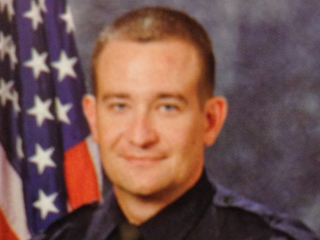
Donald Moncrief

In addition “NBC 7 has learned the identity of a second San Diego Police officer accused of misconduct.

Multiple police sources confirm that Officer Donald Moncrief, 39, is accused of touching the woman he was arresting and exposing himself to her.

We deserve to be safe. The recurrences of sexual assault committed by the above named officers as well as the investigation of San Diego police department’s facility concluded that we are not. Putting a woman or anyone in a position where they are LEGALLY sexually violated UNDER ANY THREAT should never happen. These THREATS are also in the form of entrapment by undercover police officers who are ALLOWED to lie, engage in sexual and illegal activities in an attempt to further incriminate the victim by either to face jail or deportation. The same applies to strip searches, stop and frisk procedures as well as intimate partner violence committed at a rate HIGHER than that of the general public, all while under the impunity protected by law enforcement’s blue code of silence; a brotherhood they hold protecting their own perpetrators who serve in the force.

The SDPD needs to be vigilant in training its officers and ensuring that there are consequences for breaking the law and violating basic ethical rules.

As  members of United Against Police Terror and other allied organizations, we demand The Police Chief and other leadership to:

1) Institute sustained and comprehensive training for EVERY incoming class of officers on rape, sexual assault, sexual harassment, and proper police conduct. A single training session, or a simplistic lecture not to rape, is NOT acceptable.

2) Institute a zero-tolerance policy for sexual assault, sexual harassment and sexualized behavior while on the job. While the media has only uncovered some severe cases, it illustrates an extreme example of police officers using their power to abuse women and too many of us have witnessed officers behaving in sexually inappropriate ways while on the job. There is no excuse for that behavior, and the police force must take it seriously. We want an easily-accessible reporting mechanism for sexual assault and harassment at the hands of police officers, and a demonstrated commitment to punishing officers who exploit their position to harass and assault the people they are supposed to protect.

3) Be accountable to the community of San Diego in a transparent process by hiring an independent community appointed auditor of law enforcement as well as implementing the above two demands. They must keep community leaders and San Diego County residents informed about the initiatives they institute, as well as keeping local politicians accountable and how they are working to make sure this victims shaming culture is not allowed and these uniformed perpetrators are NOT above the law!

Posted in Uncategorized | Leave a comment

How to Stop Cops from Searching Your Car

While police generally need a warrant to search you or your property — during a traffic stop, police only need probable cause to legally search your vehicle. Probable cause means police must have some facts or evidence to believe you’re involved in criminal activity.

In other words, an officer’s hunch without evidence of illegal activity is not enough to legally search your car. Before searching, he must observe something real. Common examples of probable cause include the sight or smell of contraband in plain view or plain smell, or an admission of guilt for a specific crime. The presentation of any of these facts would allow an officer to perform a search and make an arrest.

Be aware that minor traffic violations (e.g. speeding, broken tail-light, or expired registration) arenot considered probable cause.

Okay. So how can I keep police from searching my car?

Simply understanding the legal definition of probable cause probably won’t be enough to prepare you for the pressure and confusion of a real police encounter.

Most police are able to exploit a major loophole to the probable cause search requirement. But by following these basic rules, you’ll be better able to prevent police from tricking you into giving up your your constitutional rights. You’ll also improve your odds of driving away safely.

Always Be Calm & Cool

If police flag you down, pull over immediately, turn off your car, and place your hands on the wheel. Police like to see your hands for their own safety — so wait until they request your paperwork before reaching for it. At night, it’s also a good idea to turn on the dome light, so the officer can see you’re not armed.

Always greet policemen and policewomen as “Officer”. For example, you may start off with “Good afternoon, Officer. How’s it going today?” Under no circumstances should you ever talk back, raise your voice, or use profanity with a police officer. Being hostile with police is stupid and dangerous. You can’t win that game.

If the officer writes you a ticket, accept it quietly and never complain. Listen to any instruction on paying the fine or contesting the ticket, and drive away slowly.

Remain Silent: What You Don’t Say Can’t Hurt You

Police may try to get you to admit to having broken a law. For example, an officer may ask, “Do you know how fast you were going?”

You may assert your 5th Amendment protection against self-incrimination by refusing to admit you might have broken a law. As such, the best answer to that and similar questions is “No, Officer.”

Because anything you say can and will be used against you in court, the less you say the better. You also don’t want to announce to police that you know your rights. They’ll take that as a challenge. Just keep quiet and calm.

You Have the Right to Refuse Search Requests

Police may order the driver and any passengers out of the vehicle. If this happens, step out of the car. If they have reasonable suspicion to detain you, police may frisk the outside of your clothing to check for weapons, but only if they have a basis for suspecting you’re armed.

If police detain and frisk you, you have the right to clearly state your refusal to consent to the search. For example, you may say “Officer, I’m not resisting. I do not consent to this search.” But you should only verbally refuse. Never physically resist. Just touching an officer could get you tasered or beaten. You could also get a felony charge for assaulting a police officer.

Whether they frisk you or not, police may ask you a series of questions. They will probably include something like “You don’t mind if I have a look in your car?” Beware of that question: It’s the legal loophole that the officer wants to snare you in. (It might even sound like a command, but it’s technically a request.)

In response to such request, you may politely decline by saying “Officer, I know you’re just doing your job, but I don’t consent to searches.” Some officers may use their authority to make you feel obligated to prove your innocence by asking “What do you have to hide?” Don’t fall for such tricks. If necessary, repeat your refusal.

Remember: The 4th Amendment protects your right to refuse search requests, but it doesn’t require police to tell you about your right to refuse. In fact, consenting to searches automatically makes them legal in the eyes of the law. So if you’re pulled over, don’t try to figure out whether or not the officer has probable cause to legally search you. You always have the right to refuse searches.

Refusing a search request is not an admission of guilt and does not give the officer the legal right to search or detain you. In fact, most avoidable police searches don’t occur because police have probable cause. They occur because people get tricked or intimidated into consenting to search requests.

If police search your car and find illegal items despite your refusal, your lawyer can file a motion to suppress — or throw out — the evidence in court. If the judge agrees that the officer’s search violated the 4th Amendment’s probable cause requirements, she’ll grant the motion. Unless the prosecution has other evidence, your charges would be dismissed.

Determine if You’re Free to Go

Unless you’re detained or arrested, you may terminate the encounter anytime. But don’t wait for the officer to dismiss you. Ask if you’re free to go.

For example, if an officer threatens to call in a K-9 unit if you refuse a search, you should ask“Officer, are you detaining me, or am I free to go?”

Not only can this line can help withdraw you from an encounter, it also deflects any of the officer’s probing questions or threats. So if an officer says “If you cooperate with me, everything will go easy for you.” You may respond by saying either “Officer, I don’t consent to any searches” or “Officer, am I free to go?”

If the officer lets you leave, do so immediately. If the officer’s answer is unclear, or if he asks additional questions, persist by repeating “Officer, am I free to go?”

Ask for a Lawyer

If you are not free to go, you are being detained. The officer might have some reason to suspect you of a crime, and you may be arrested.

In such a situation, your magic words are “I’m going to remain silent. I would like to see a lawyer.” These magic words are like a legal condom. They’re your best protection if you’re under arrest.

Never rely on police to inform you of your right to remain silent and see a lawyer. Repeat the magic words as necessary, but say no more. Remember that anything you say can and will be used against you in court.

Reprinted with permission from Flex Your Rights.org.

Posted in Uncategorized | Leave a comment

Video raises serious doubts about police actions during 2013 shooting

Jonathan Vasquez & Silvia Fletes

Jonathan Vasquez & Silvia Fletes

by Aaron Leaf

On January 13, 2013 Police attempted to pull over a car for speeding in the Encanto area of San Diego. Driving the car was 21 year old Jonathan Vasquez. The car had been stolen, though the owner had not yet reported the theft to police. As seen on helicopter video, Jonathan pulled into a dirt lot, the officers stopped their cars and got out, possibly expecting the suspect to flee on foot.

Police claim, however, “The driver of the car suddenly made a U-turn and drove directly toward the officers, who were outside their cars giving verbal commands for the suspect to stop.”

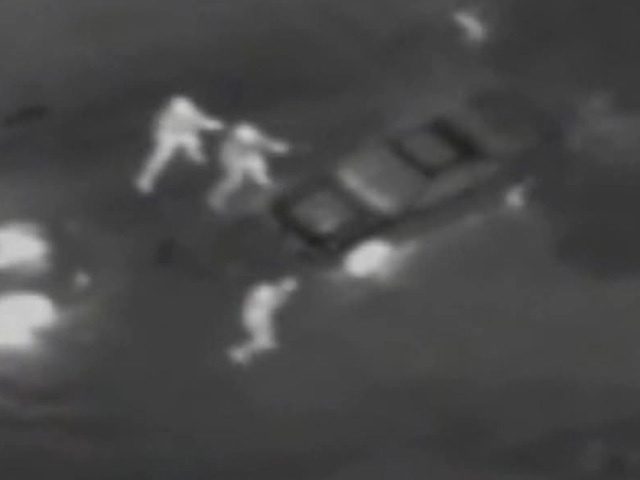
The recently released helicopter video raises serious doubts about police actions. a pursuit that began with an attempted traffic stop for speeding. “He’s going to crash,” a voice heard from the helicopter. Near a dead end, the car veers into a front lawn, and three SDPD officers are seen leaving their cars. As the driver moves forward, the officer in front of the car trips and the car comes to a sudden stop, stuck in a tree stump.

vasquez_chase_shooting_video_1392344780498_2887264_ver1.0_640_480A few seconds later, white flashes — a hail of gunfire — can be seen.

“Next thing you know all these gunshots. It was like 8 to 9 shots,” witnesses said

19 year old Silvia Fletes, Jonathan’s girlfriend, was in the passenger seat of the car and was shot in the shoulder and arm and dragged out of the car by her hair as seen in the video is proves the officers were trigger-happy. “She was scared…because she didn’t know what was going on,” said Alvin Gomez, Fletes’ attorney. Gomez said Silvia had no clue the vehicle was stolen and had no idea why officers fired at her. “They behaved outrageously,” said Gomez. Attorney Gomez also said police mistakenly got out of their cars when the suspected stolen car was still moving. Silvia has been diagnosed with post-traumatic stress disorder, including depression, anxiety and nightmares.

San Diego Police Officers Sergio Gallegos, Rogelio Medina and Nicholas Troncale were identified as the individuals who fired the shots that killed Jonathan and injured Silvia.

ALL ARE BACK ON REGULAR DUTY.

The civil trial is expected to take place sometime in 2015

We as United Against Police Terror stand against the Violent and Deadly actions by Police on our communities. We call on all people of the community to Stand Up and Speak Out against the Oppression of our Youth and Family Members.

(download flyer)

Posted in Uncategorized | Tagged , , , | Leave a comment

Your Right of Defense Against Unlawful Arrest

arrest“Citizens may resist unlawful arrest to the point of taking an arresting officer’s life if necessary.” Plummer v. State, 136 Ind. 306. This premise was upheld by the Supreme Court of the United States in the case: John Bad Elk v. U.S., 177 U.S. 529. The Court stated: “Where the officer is killed in the course of the disorder which naturally accompanies an attempted arrest that is resisted, the law looks with very different eyes upon the transaction, when the officer had the right to make the arrest, from what it does if the officer had no right. What may be murder in the first case might be nothing more than manslaughter in the other, or the facts might show that no offense had been committed.”

“An arrest made with a defective warrant, or one issued without affidavit, or one that fails to allege a crime is within jurisdiction, and one who is being arrested, may resist arrest and break away. lf the arresting officer is killed by one who is so resisting, the killing will be no more than an involuntary manslaughter.” Housh v. People, 75 111. 491; reaffirmed and quoted in State v. Leach, 7 Conn. 452; State v. Gleason, 32 Kan. 245; Ballard v. State, 43 Ohio 349; State v Rousseau, 241 P. 2d 447; State v. Spaulding, 34 Minn. 3621.

“When a person, being without fault, is in a place where he has a right to be, is violently assaulted, he may, without retreating, repel by force, and if, in the reasonable exercise of his right of self defense, his assailant is killed, he is justified.” Runyan v. State, 57 Ind. 80; Miller v. State, 74 Ind. 1.

“These principles apply as well to an officer attempting to make an arrest, who abuses his authority and transcends the bounds thereof by the use of unnecessary force and violence, as they do to a private individual who unlawfully uses such force and violence.” Jones v. State, 26 Tex. App. I; Beaverts v. State, 4 Tex. App. 1 75; Skidmore v. State, 43 Tex. 93, 903.

“An illegal arrest is an assault and battery. The person so attempted to be restrained of his liberty has the same right to use force in defending himself as he would in repelling any other assault and battery.” (State v. Robinson, 145 ME. 77, 72 ATL. 260).

“Each person has the right to resist an unlawful arrest. In such a case, the person attempting the arrest stands in the position of a wrongdoer and may be resisted by the use of force, as in self- defense.” (State v. Mobley, 240 N.C. 476, 83 S.E. 2d 100).

“One may come to the aid of another being unlawfully arrested, just as he may where one is being assaulted, molested, raped or kidnapped. Thus it is not an offense to liberate one from the unlawful custody of an officer, even though he may have submitted to such custody, without resistance.” (Adams v. State, 121 Ga. 16, 48 S.E. 910).

“Story affirmed the right of self-defense by persons held illegally. In his own writings, he had admitted that ‘a situation could arise in which the checks-and-balances principle ceased to work and the various branches of government concurred in a gross usurpation.’ There would be no usual remedy by changing the law or passing an amendment to the Constitution, should the oppressed party be a minority. Story concluded, ‘If there be any remedy at all … it is a remedy never provided for by human institutions.’ That was the ‘ultimate right of all human beings in extreme cases to resist oppression, and to apply force against ruinous injustice.’” (From Mutiny on the Amistad by Howard Jones, Oxford University Press, 1987, an account of the reading of the decision in the case by Justice Joseph Story of the Supreme Court.

As for grounds for arrest: “The carrying of arms in a quiet, peaceable, and orderly manner, concealed on or about the person, is not a breach of the peace. Nor does such an act of itself, lead to a breach of the peace.” (Wharton’s Criminal and Civil Procedure, 12th Ed., Vol.2: Judy v. Lashley, 5 W. Va. 628, 41 S.E. 197).

You are also within your rights not to answer any questions without a lawyer present, and if possible, to demand a video recording be made of the entire encounter that you or your lawyer keep as evidence, so that federal prosecutors can’t get away with charging you with making false statements to a government investigator and testifying about what you said. See this article.


As a practical matter one should try to avoid relying on the above in an actual confrontation with law enforcement agents, who are likely not to know or care about any of it. Some recent courts have refused to follow these principles, and grand juries, controlled by prosecutors, have refused to indict officers who killed innocent people claiming the subject “resisted” or “looked like he might have a gun”. Once dedicated to “protect and serve”, far too many law enforcement officers have become brutal, lawless occupying military forces.

Posted in Uncategorized | Leave a comment

Police Domestic Violence

by Cathy Mendonca

bestwordleRegardless if an officer is on or off duty. Society must dismantle the popular myth of police as an ally to the domestic violence movement, and embrace the harsh reality that police culture of power and control while maintaining a code of silence, makes the occurrence of domestic violence 2 to 4 times more common in police families than in the general population.

When called, police often do not view domestic violence as criminal behavior. This results in a lack of police intervention, or inappropriate or delayed responses. Failing “to protect the legal rights of” battered women. Domestic Violence was historically considered a “private matter” causing very little police involvement if and when someone is battered or raped by their husband or partner. Regardless of the fact that there are mandatory domestic violence arrest laws, many police officers rarely arrested perpetrators and sometimes have the attitude that domestic violence situations were not considered “real” police work.

The officers code of silence practiced on the job is part of the brotherhood they have with one another in every aspect of their life. As DV Advocate and feminist Diane Wetendorf states, “the officer counts on other officers to cover, giving them a story explaining why they “had to do” whatever they did. Whether or not others personally condone that behavior, it is still rationalized, saying it was stress or pressure, or quite simply, that their only human. The version of the story is then repeated and stuck to, putting themselves on the line for their fellow officer. Whether testifying in court or smoothing things out at home, the rules are simple for them:Say as little as possible, Answer only the question asked.Don’t give details. Deny all accusations. Say “I don’t remember, I didn’t see that, or I don’t know.” This brotherhood entitles the offender to “professional courtesy.” The responding officers usually apologize for the intrusion and any inconvenience, and it’s understood that “nothing happened here.” Wetendorf then goes on to say, ‘Society grants members of law enforcement enormous power over citizens to enable the police to keep the peace and to preserve social order. They are granted a great deal of freedom to use their judgment regarding which laws to enforce, when and against whom. This wide range of options and authority can lead to the abuse of their power. Some police officers come to see themselves not as simply enforcers of the law, but as the law itself.”

Law enforcement are professionally trained to get and keep people and situations under control. When a person challenges police authority, the police have the power to physically restrain, to use force when necessary, and to deprive him/her of personal freedom. Along with physical control, their authoritative presence and investigative capabilities under law, they are uniformed perpetrators of an even more dangerous ‘power and control’ cycle for victims. As an advocate against domestic violence and member of United Against Police Terror, I am speaking out today against the following uniformed perpetrators and state sanctioned violence we know of as law enforcement. To close out this statement, I would like to give the following hard facts These batterers; Always have guns (often many guns and other weapons) and are trained by the state to use them. Know how to inflict pain and leave no marks or bruises. Trained by the state to intimidate by presence alone, and to use their body as a weapon. Let their victims know they have the power in society to harm or kill them and get away with it, or have others do it for them. Tell the victim that IF they call police, the officers (colleagues and friends) will believe the officer over them … and they’re right. Often threatens that if they report to police to ‘cause trouble’, the victim’s life could be in great danger. Have access to surveillance tools like phone taps, police scanners, vehicle tracking devices, and audio and video recording equipment to stalk or monitor the victim’s activities. Will stalk or have fellow officers stalking their victims in the form of “patrolling” their house, work place, children’s school or daycare center. Know the location of battered women’s shelters. Knows the court system, often testifies in court, and knows district attorneys, judges and bailiffs personally.

dvcopin addition, friends, family and service providers are afraid of the batterer and thus afraid to get involved and jurors often assume police officers would not lie in court.

Posted in Uncategorized | Leave a comment